Father of Analytical Psychology
Carl Jung established the field of analytical psychology, and thus became known as, the "Father of Modern Analytical Psychology". As the second most important psychologist, Jung invented concepts such as the extroverted and introverted personality types. He is one of the greatest theorists of all time, and developed novel and controversial ideas that were previously scorned.
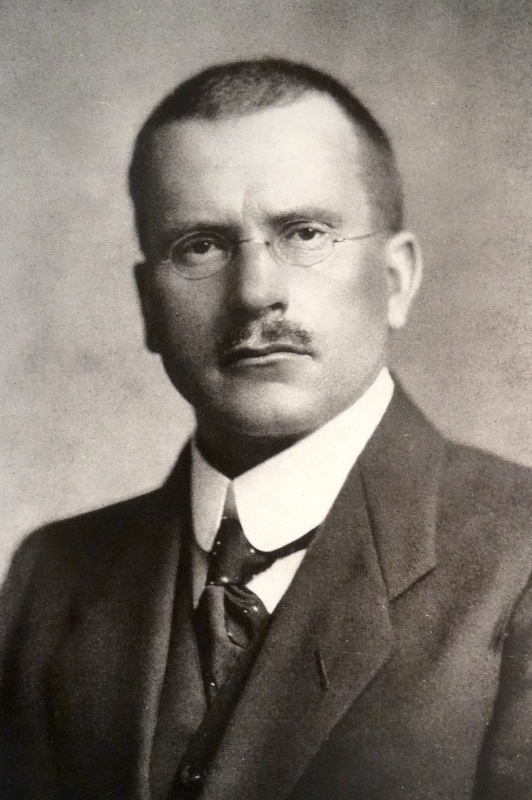 (Carl Jung as a young man, 2012) (Carl Jung as a young man, 2012)
"Carl Jung founded the field of analytical psychology and, along with Sigmund Freud, was responsible for popularizing the idea that a person’s interior life merited not just attention but dedicated exploration a notion that has since propelled tens of millions of people into psychotherapy. Freud, who started as Jung’s mentor and later became his rival, generally viewed the unconscious mind as a warehouse for repressed desires, which could then be codified and pathologized and treated. Jung, over time, came to see the psyche as an inherently more spiritual and fluid place, an ocean that could be fished for enlightenment and healing." ―New York Times
|
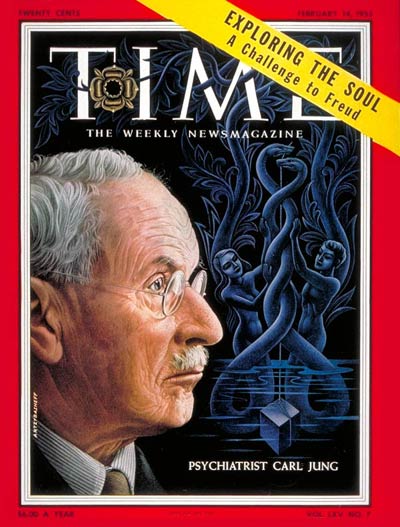 (Front cover of Time Magazine, 1955) (Front cover of Time Magazine, 1955)
"For a man who has added such words as introvert, extravert and complex (in its psychological meaning) to the party patter of millions, Jung has indeed great difficulty in making people see what he means. That is partly because he has explored yoga, alchemy, fairy tales, the tribal rites of the Pueblo Indians, German romantic philosophers, Zen Buddhism, extrasensory perception and the cave drawings of prehistoric man, along with an estimated 100,000 dreams. But when Dr. Jung is accused of having left medicine for mysticism, he replies that psychiatry must take into account all of man's experience, from the most intensely practical to the most tenuously mystical." ―Time Magazine, Medicine: The Old, Wise Man
|
"Show me a sane man and I will cure him for you." ―Carl Jung
"Jung’s legacy provides an arena for continuing thought and research, as evidenced in the continuing flow of scholarly papers in the Journal of Analytical Psychology. This range of interest also influences Jungian clinical practice: Jung maintained that the fundamental problems for many patients are religious ones (in the broad sense), so Jungian analysts are often willing to engage more directly with existential issues of meaning and purpose and do recognize the importance of spiritual experience in people’s lives." ―bpc.org.uk

*Signature of Carl Jung, no date applicable